How to Calculate Your Protein Ratio per Kilogram of Body Weight
Learn how to calculate your daily protein needs accurately and discover how under-dosing can harm your performance and your gains, whatever sport you practise.
Written by
João Araújo
Physical Education Teacher (FADEUP – University of Porto) · Futsal Coach – Level II · UEFA B License · Master’s in Physical Education
15 years teaching Physical Education in schools, 20 years coaching futsal at youth development level and 5 years coaching football. Federated and amateur football and futsal player.
For months, an amateur runner followed their training plan religiously. Good sleep, no injuries, consistent logging of times. And yet, performance stagnated and recovery between sessions seemed increasingly slow. Only when they adjusted their protein intake, from 0.9g to 1.6g per kilogram of body weight, did the plateau disappear.
Protein is the macronutrient most frequently underestimated by amateur athletes. Not from lack of information, but from lack of calculation.
Why Protein Is Critical for the Athlete
Protein is not simply the “muscle macronutrient”. It is the building block of virtually every repair and adaptation process in the body:
- Muscle protein synthesis: protein provides the amino acids needed to repair muscle fibres damaged during exercise
- Recovery: adequate intake reduces recovery time between sessions
- Preventing catabolism: in protein deficit, the body can begin breaking down muscle tissue to obtain amino acids, the opposite of what any athlete wants
- Immune function: the stress of exercise increases the need for amino acids to support the immune response
How Much Do You Need? Recommendations by Activity Type
Protein needs are not universal. they vary with the type of effort, intensity, and the athlete’s goal.
| Profile | Need (g/kg/day) |
|---|---|
| Sedentary | 0.8 |
| Light recreational exercise | 1.2 – 1.4 |
| Endurance sports (running, cycling, swimming) | 1.4 – 1.7 |
| Team sports (football, basketball, futsal) | 1.6 – 2.0 |
| Strength and power (bodybuilding, weightlifting) | 1.8 – 2.2 |
| Cutting phase / weight loss with muscle retention | 2.0 – 2.4 |
These values are based on scientific sports nutrition literature consensus, including guidelines from the International Society of Sports Nutrition (ISSN).
How to Calculate Your Daily Requirement
The calculation is straightforward:
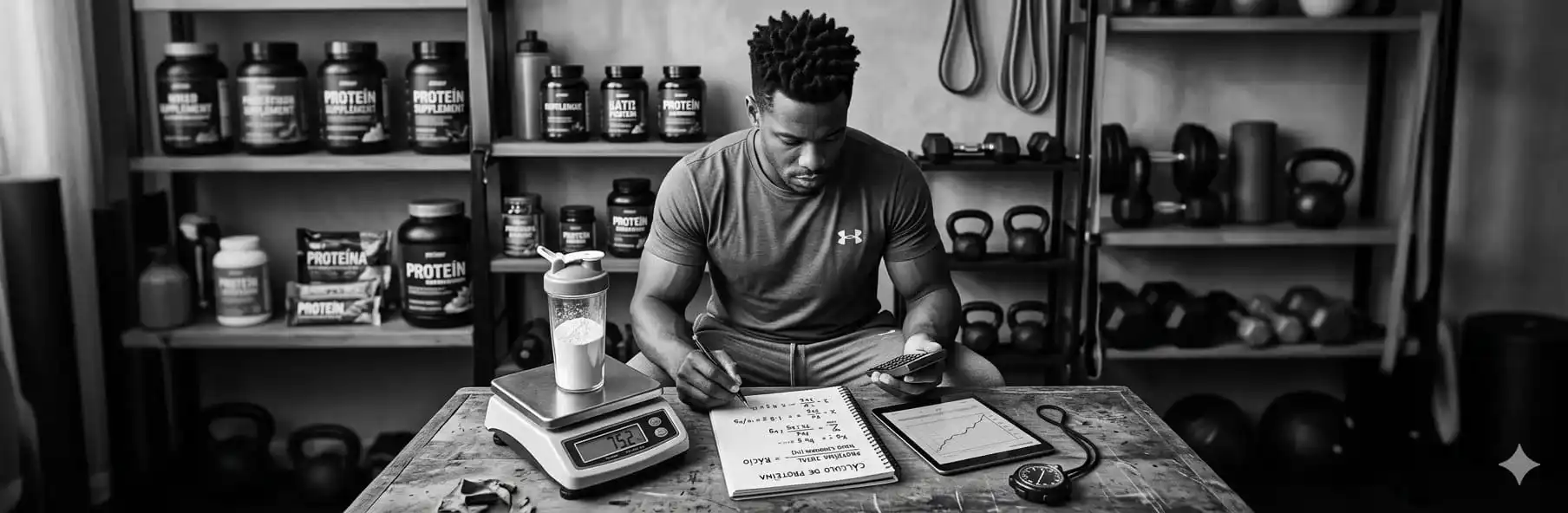
Daily protein (g) = Body weight (kg) × Need factor (g/kg)
Example 1: Amateur runner, 70 kg
- Factor: 1.5 g/kg (endurance sport)
- Requirement: 70 × 1.5 = 105 g of protein per day
Example 2: Futsal player, 75 kg
- Factor: 1.8 g/kg (team sport + intense physical training)
- Requirement: 75 × 1.8 = 135 g of protein per day
Example 3: Bodybuilder, 80 kg, muscle gain phase
- Factor: 2.0 g/kg
- Requirement: 80 × 2.0 = 160 g of protein per day
What Happens with Under-Dosing
Protein under-dosing, consuming less than required for your activity level, has direct and often silent consequences:
In Strength Training and Bodybuilding
Without enough protein, the training stimulus does not translate into muscle growth. The body may have the signal to grow, but without the “building materials” (amino acids), muscle protein synthesis is limited. The result? Inexplicable plateaus, even with progressive overload.
In Endurance Sport
Protein is broken down as an energy source when glycogen stores are depleted. If protein intake is low, the body resorts to muscle catabolism to sustain the effort, compromising body composition and increasing post-exercise fatigue.
In Team Sports
Recovery between games and training is directly affected. Players with inadequate protein intake show higher accumulated micro-fatigue, longer recovery times, and over the medium term, greater susceptibility to muscle injuries.
For All Athletes
In general, protein under-dosing results in:
- Slower recovery between sessions
- Greater muscle mass loss during caloric deficit phases
- A more compromised immune system during periods of intense training
- Reduced adaptive response to the training stimulus
How to Distribute Protein Throughout the Day
Total daily quantity matters, but distribution matters too. Muscle protein synthesis is maximised when protein is spread across 3 to 5 meals of 20 to 40g, rather than concentrated in one or two meals.
The post-workout meal is particularly important: consuming 20–40g of high-quality protein within 30 to 60 minutes after exercise enhances recovery and muscle synthesis.
High-Quality Protein Sources
Not all proteins are equal. For athletes, the best sources are those with a complete essential amino acid profile:
- Animal: chicken, turkey, eggs, tuna, salmon, cottage cheese, Greek yoghurt
- Plant-based (combining sources): legumes + whole grains, tofu, tempeh, edamame
If diet does not cover calculated needs, a protein supplement (such as whey protein or plant protein) can be useful. But it is always a complement, never the starting point.
The Calculation That Can Change Your Performance
Most athletes do not think of protein as a performance variable. They think of it as something they “should eat after training”. But when you run the calculation and compare it to what you actually eat, the gap can be 40, 60, or 80 grams per day.
That gap is often the explanation for plateaus that training alone could never resolve.
Knowing your daily total is only half the equation. When you eat it also matters, just not in the way most people think. See our breakdown of the anabolic window: science or myth to understand post-workout timing.
The body you train is also the body you fuel. And what you do not measure, you cannot improve.