Is My Child Always Tired After Football Training? A Parent's Guide
A mum asked me if her son's tiredness after football training was normal. Here's the honest answer, and the signs that separate healthy fatigue from overload.
Written by
João Araújo
Physical Education Teacher (FADEUP – University of Porto) · Futsal Coach – Level II · UEFA B License · Master’s in Physical Education
15 years teaching Physical Education in schools, 20 years coaching futsal at youth development level and 5 years coaching football. Federated and amateur football and futsal player.
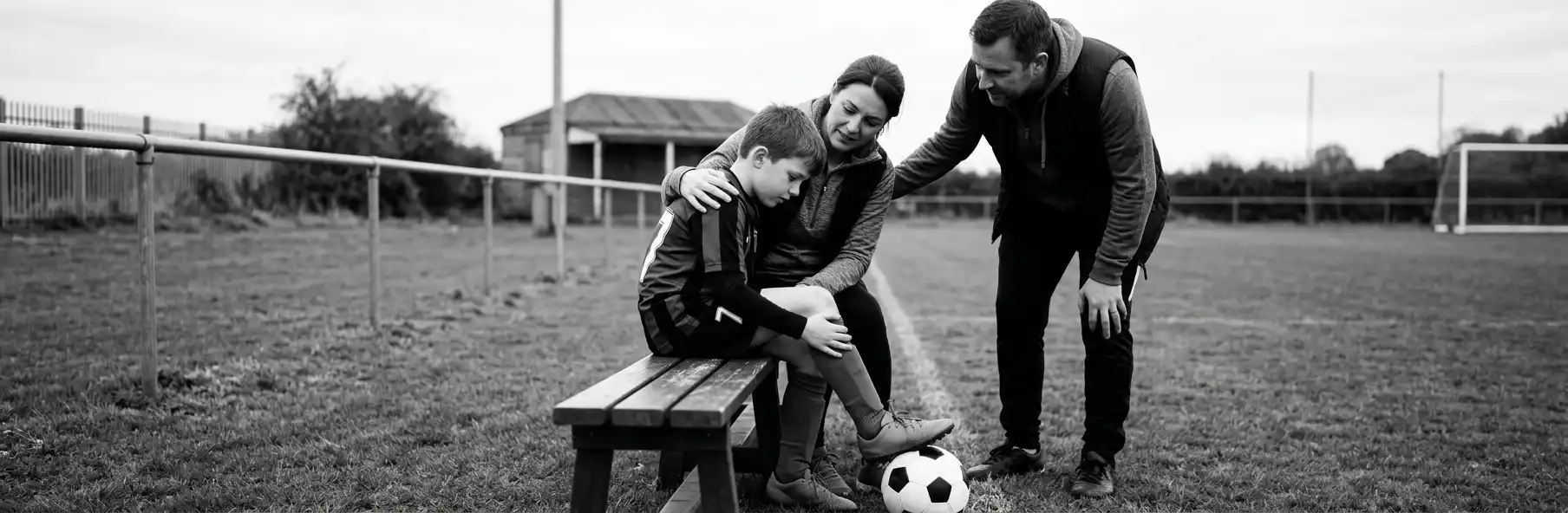
I got this question from the mum of a 12-year-old at an u13 grassroots club near Manchester two weeks ago: “My son comes home from football training completely wiped out, sleeps badly and sometimes won’t even eat his dinner. Is that normal, or should I be worried?” It’s one of the questions I hear most from parents of academy and grassroots players, and the answer is never a simple yes or no.
Is Being Tired After Training Always Normal?
Yes, up to a point. A child or teenager who has just done a well-structured football training session, with sprints, changes of direction and jumps, should feel physically tired. That’s the body responding to the stimulus exactly as it’s supposed to. The common mistake parents make is assuming any sign of tiredness is a red flag; the opposite, more dangerous mistake is normalising everything because “that’s just sport”.
(There’s no single formula that works for every age group and every kid: an u11 and an u17 recover at completely different rates, and two players in the same squad can vary a fair bit too.)
When Does Tiredness Stop Being Normal?
Three signs, together or repeated, are worth paying closer attention to as a parent:
- Sleep that doesn’t recover them: your child sleeps their usual hours but is still shattered the next morning, day after day.
- Persistent loss of appetite: skipping meals after training, not once but on several days in a row.
- A mood shift out of character: irritability, flatness, or sudden reluctance to go training in a kid who used to enjoy it.
One of these on its own, on a bad day, isn’t a worry. All three together, or one of them repeated for more than a week, is a pattern, and patterns are worth raising with the coach.
Questions like this are why I started recommending that parents who want to stay close to their child’s football journey keep a simple log of sleep, appetite and mood after every session. The SportsLabTools Athlete Journal tool was built exactly for this: the young player logs how they felt in seconds, and after two or three weeks the pattern is obvious instead of relying on a tired parent’s memory at the end of the day.
What to Do This Week, Practically
Three practical steps, nothing complicated:
- Log it, don’t just rely on memory. Three restless nights in a row are easy to forget if they’re not written down.
- Talk to the coach before jumping to conclusions. They’ll know if the week’s training load was unusual, whether pre-season, a tournament or an extra fixture, or genuinely within normal range.
- Don’t pull them out of training as the first response. Cutting football out treats the visible symptom, not the cause, which is often sleep, diet or school stress rather than the training itself.
See also: Fatigue Detection in Football: Signs to Adjust Training Load, the same early-warning logic explained from the coach’s side.
If there’s one thing I’ve learned to tell worried parents, it’s this: normal tiredness clears after a good night’s sleep and a rested weekend. If it doesn’t clear, football isn’t the problem: the balance around it needs adjusting.
Don’t let tiredness build up unnoticed. Use the SportsLabTools Athlete Journal tool to track your child’s sleep, appetite and mood week after week.
*This account is based on a real case, but the person's identity has been kept private and some contextual details have been recreated for illustrative purposes.*