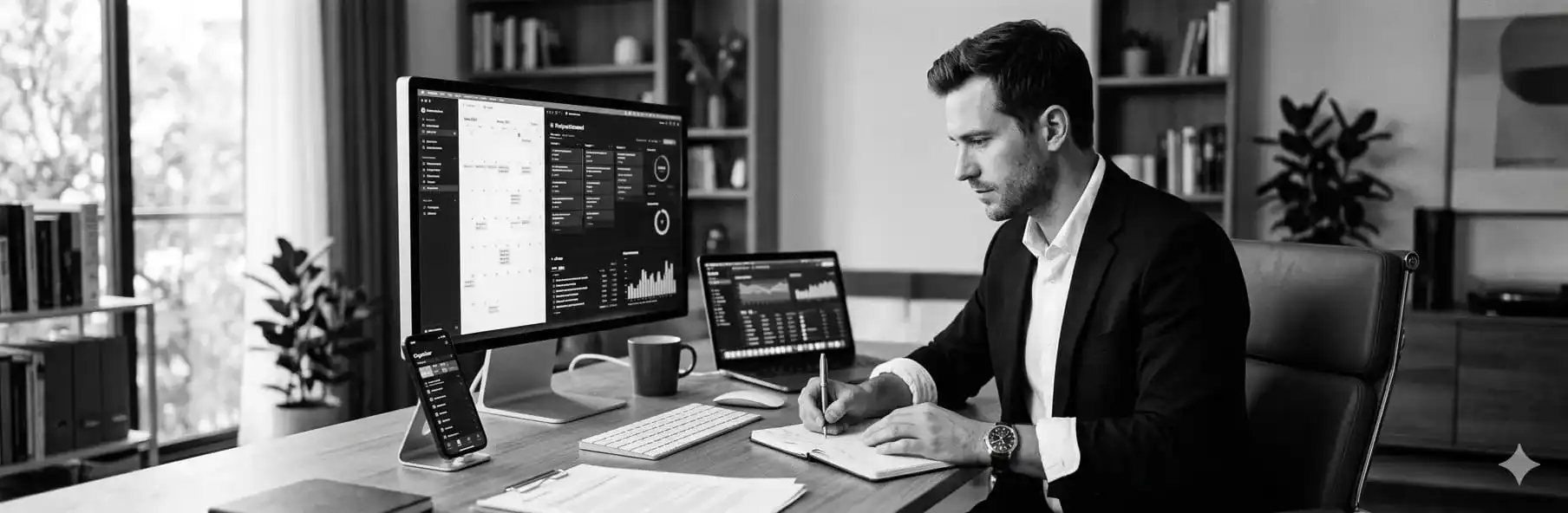
Creating High-Performance Routines with Digital Tools
The difference between an athlete who grows and one who stagnates is not talent. It is the consistency of their routines. Discover how digital recording can transform intention into habit and habit into performance.
Written by
João Araújo
Physical Education Teacher (FADEUP – University of Porto) · Futsal Coach – Level II · UEFA B License · Master’s in Physical Education
15 years teaching Physical Education in schools, 20 years coaching futsal at youth development level and 5 years coaching football. Federated and amateur football and futsal player.
Talent gets you into the game. Routines keep you in it.
There is a very common idea in amateur sport. The idea that great athletes are simply “more gifted,” that elite performance results from a natural talent that most people do not have. It is a comforting idea because it relieves responsibility. But it is, for the most part, wrong.
What separates an athlete who consistently improves from one who stagnates is not talent. It is the structure of their daily routines.
What Is a High-Performance Routine?
A high-performance routine is not a mystical ritual or a rigid plan with no room for the unexpected. It is a set of intentional behaviours that repeat consistently, creating an internal and external environment favourable to growth.
In the sports context, these routines are organised around three moments:
Pre-training routine: what you do in the hours and minutes before training. It includes nutritional preparation, mental warm-up, review of the session’s objectives. An athlete who arrives at training without knowing what they are going to work on wastes part of the available training stimulus.
Intra-training routine: how you structure the session. Priorities, sequences, metrics to monitor, intensity management. This routine prevents training from being merely “time in the gym” and transforms it into a directed stimulus.
Post-training routine: what happens in the 30–60 minutes after training. Hydration, nutrition, recording. The last of these. recording. is where the digital routine comes in.
Why Recording Is the Foundation of Everything
Without records, every training session starts from zero. Without reference to what was done, what worked, what failed. The athlete who records always has a starting point for the next session; a mirror to see where they stand in their journey.
Recording is not bureaucracy. It is memory. And memory is what transforms isolated experiences into accumulated learning.
With a simple record. what I did, how I felt, what I notice. The athlete begins to identify patterns:
- I perform better when I slept more than 7 hours
- My sprints are faster when I did not train the previous day
- My technique drops when I am below RPE 7 in the warm-up
- Thursday sessions are consistently worse. probably due to accumulated load
From Recording to Planning
Recording is the past. Planning is the future. And high-performance athletes use the past to build the future intelligently.
With 4 to 6 weeks of accumulated data, you start to have the raw material to plan in an informed way:
- Which days of the week is your performance consistently highest?
- At what point in the week is your recovery most effective?
- What type of stimuli precede your best sessions?
With these questions answered by your own data, planning stops being guesswork and becomes strategy.
Setting Goals Based on Data
The final pillar of the digital routine is goal-setting. Not vague goals (“I want to improve”). but specific goals anchored in the data you already have.
A practical example: after 6 weeks of recording, you notice that your 200m test time has dropped from 31.2 to 30.4 seconds. Based on this rate of improvement, you set a goal for the next 6 weeks: 29.8 seconds. Not too ambitious, not too comfortable. Calibrated on your own data.
This type of goal has a different motivational power from generic goals. because it is personal, because it is based on real evidence, and because it creates a clear direction for every session.
The Routine Nobody Sees
Most of what makes a high-performance athlete is never seen by the public. It is the hours of preparation, the recovery records, the goal reviews at 11pm, the notes on what went wrong and the plan to fix it.
It is the invisible work; it is precisely that work that data makes visible.
Start by recording. Then plan. Then set goals. And watch what happens to a routine that was previously only intention.
Recording training sessions on video is one of the most effective ways to identify what works in your routine; what needs adjusting. The SportsLabTools Futsal Video Analysis lets you review sessions, annotate key moments and build a knowledge base about your own performance over time.
The routine you record is the routine that lives. The one you do not record, you forget; you always start from zero again.
Optional accelerator · the tool is always free
Start tagging matches without spending hours building categories
An analysis model with 12 categories and more than 60 actions organised by game moment, already carrying individual/collective context and pitch and goal location. Import it and tag your first clip right away.