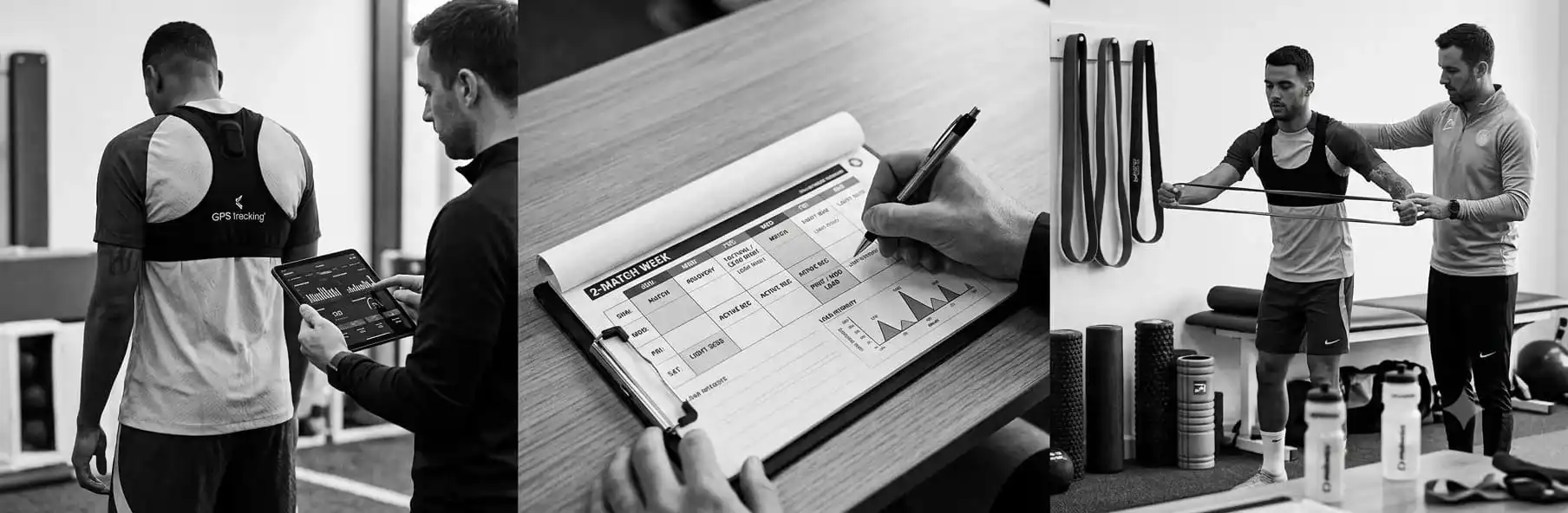
In-Season Injury Prevention in Football: Load Management in Two-Match Weeks
A step-by-step in-season injury prevention plan for football, focused on load management in two-match weeks and individual player monitoring.
Written by
João Araújo
Physical Education Teacher (FADEUP – University of Porto) · Futsal Coach – Level II · UEFA B License · Master’s in Physical Education
15 years teaching Physical Education in schools, 20 years coaching futsal at youth development level and 5 years coaching football. Federated and amateur football and futsal player.
A training load increase of more than 15% from one week to the next more than doubles the risk of a muscle injury. That figure, replicated across several sports science studies applied to football, is the scientific basis that should guide all in-season load management; it’s routinely ignored the moment the fixture list tightens with a midweek match.
Two-match weeks are the biggest injury risk factor across a long season. Not because playing twice is inherently dangerous, but because most clubs fail to adjust training load to compensate for the reduced recovery time available.
Why Two-Match Weeks Are a Different Kind of Challenge
In a normal one-match week, the body has 5 to 6 days to recover from the previous match’s neuromuscular load before the next fixture demands a new peak effort. In a two-match week, that window shrinks to 2 to 3 days. not enough for full recovery, especially from the eccentric muscle fatigue tied to braking, changes of direction and repeated sprints.
The Plan: Adjusted Weekly Load Management
| Situation | Training volume | Physical focus | Squad rotation |
|---|---|---|---|
| Normal week (1 match) | Standard | Strength + aerobic capacity on MD-4 | Optional |
| Two-match week | Reduced by 40-50% | Activation and mobility only | Mandatory for at-risk players |
| Recent muscle injury | Heavily reduced | Supervised, progressive eccentric work | Individual minutes management |
Phase 1: Identify At-Risk Players Before the Week Starts
Before planning the week, review recent history: players with a muscle injury in the last three months, players carrying high accumulated load (high RPE across consecutive matches), and players reporting subjective fatigue signs in their training log. This early identification determines who goes into mandatory rotation.
Phase 2: Adjust Training Content
In two-match weeks, the session between the two matches should be limited to short neuromuscular activation, low-physical-impact tactical work (video, small-sided possession without sprinting) and mobility. Cut heavy strength work and maximal sprints entirely. there isn’t enough recovery time to benefit from them without added risk.
Phase 3: Manage Minutes During Matches
Set a minutes cap for at-risk players in advance, with planned rather than reactive substitutions. A player who normally plays 90 minutes might be capped at 60-70 in the week’s second match, with the substitution already decided before kickoff, not decided mid-match by visible fatigue signs, which arrive too late.
The Most Common Mistakes in Two-Match Week Injury Prevention
- Keeping the same training volume regardless of the fixture list, completely ignores the relationship between acute and chronic load
- Not rotating at-risk players, playing the same eleven in both matches of the week accumulates fatigue with no recovery margin
- Cutting volume but keeping maximum intensity: reducing training time without reducing intensity doesn’t protect the player
- Ignoring subjective fatigue signs. informally reported muscle soreness is often the only warning before an injury
🔧 Useful Tool
Identifying at-risk players needs consistent data, not the manager’s memory. SportsLabTools Athlete Journal lets you log RPE, fatigue signs and injury history per player, surfacing who needs priority load management before the week even begins.
Individual Adjustment: Not Every Player Recovers at the Same Rate
Age, injury history and baseline fitness level produce very different recovery rates among players in the same squad. A young player with no injury history might tolerate two consecutive two-match weeks; a more experienced player with recurring muscle injuries might need individual management even in normal weeks. Treating the whole squad with the same load ignores this variability.
See also: Injury Prevention in Football Pre-Season: A Protocol for the First Weeks. The physical foundation built before the season that reduces risk once competition starts.
Checklist: Injury Prevention in Two-Match Weeks
- At-risk players identified before the week begins
- Training volume reduced by 40-50% between the two matches
- Heavy strength work and maximal sprints suspended that week
- Minutes cap set in advance for at-risk players
- Substitutions planned before the match, not decided reactively
- RPE and fatigue signs logged daily
- Individual management adjusted for age and injury history
Conclusion
Injury prevention in two-match weeks isn’t luck. it’s a deliberate technical decision about when to cut load and when to protect specific players. Clubs that manage this balance across the season arrive at decisive matches with a fit squad, instead of constantly rebuilding it from the injury list.
Log every player’s load and fatigue consistently across the season. Use SportsLabTools Athlete Journal to spot risks before they become injuries.