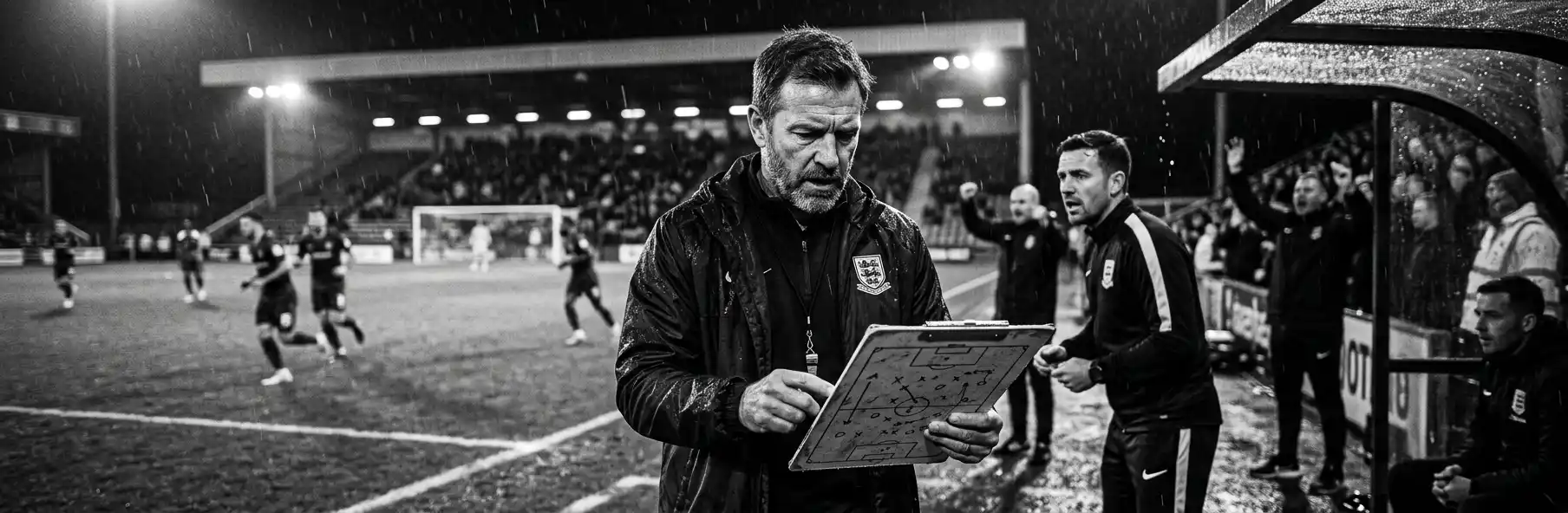
Managing Losing Streaks in Football: Reacting Tactically and Psychologically to a Results Crisis
How to manage a run of poor results in football: diagnosing the crisis, and tactical and psychological strategies to stop the spiral and rebuild confidence.
Written by
João Araújo
Physical Education Teacher (FADEUP – University of Porto) · Futsal Coach – Level II · UEFA B License · Master’s in Physical Education
15 years teaching Physical Education in schools, 20 years coaching futsal at youth development level and 5 years coaching football. Federated and amateur football and futsal player.
Four matches without a win, and the dressing room is no longer the same. Passes that used to come naturally start to feel hesitant, players avoid the risk that was part of the game a month ago, and every individual mistake gets magnified by the collective weight of the bad run. A losing streak isn’t just a results problem. it’s a psychological problem that feeds itself and, without deliberate intervention, tends to get worse before it gets better.
Why the Results Crisis Happens and Escalates
A losing streak rarely has a single cause. it usually combines accumulated fatigue, tactical adjustments the opposition has already worked out, and a psychological component that sets in from the third or fourth match without a win. The problem is these three factors feed off each other: individual anxiety worsens tactical execution, which produces worse results, which increases the anxiety further.
The Cost of Ignoring the Spiral
Without intervention, a losing streak tends to fragment the dressing room into camps. those blaming the tactical system, those blaming specific teammates, those blaming the manager. This fragmentation is harder to reverse than the poor run of results itself, and it often survives even after the team starts winning again.
The Solution: Core Principles
- Honest diagnosis before any motivational speech. work out whether the crisis is tactical, physical, psychological or a combination, before deciding the response
- Simplify, don’t reinvent, changing everything mid-crisis (system, starting XI, messaging) usually deepens the confusion; small, clear adjustments work better
- One-to-one communication, not just collective. the players most affected psychologically need individual conversations, not just the generic team talk
- Redefine short-term success. temporarily shifting the focus from the result to process goals (executing the plan well, not necessarily winning) lowers pressure without lowering standards
Application: Concrete Strategies
The Diagnosis Meeting With the Leadership Group
Before any tactical adjustment, meet with the captain and senior players to understand how the group is actually experiencing the crisis. Often, the problem the manager perceives isn’t the same one the squad feels as most urgent.
Temporary Tactical Simplification
During a losing streak, reduce the number of tactical principles demanded per match. this isn’t the moment to introduce new complexity. Focus on two or three clear points the team can execute with confidence, even under pressure.
Small, Visible Wins
Set short-term goals the team can achieve regardless of the final result, keeping a clean sheet for 60 minutes, say, or completing a minimum number of passes in the build-up. These small wins rebuild confidence gradually.
🔧 Useful Tool
Managing a results crisis requires understanding each player’s individual state, not just the collective result. The SportsLabTools Athlete Journal lets you log how each player is experiencing the run, identifying who needs more individual support before the problem worsens.
Special Cases: When the Crisis Involves External Pressure
When pressure from fans or the board adds to the internal crisis, shield the dressing room from external noise as much as possible, sharing every outside criticism with the squad only feeds collective anxiety. The focus should stay on what the team controls: the work process, not the comments from outside.
See also: Rebuilding Player Confidence After a Costly Mistake. the same confidence-rebuilding principles, applied at the individual level rather than the collective one.
Checklist: Managing a Losing Streak
| Practice | In Place? |
|---|---|
| Honest diagnosis of the crisis’s cause (tactical/physical/psychological) | ☐ |
| Meeting with the squad’s leadership group | ☐ |
| Temporary tactical simplification | ☐ |
| One-to-one conversations with the most affected players | ☐ |
| Short-term process goals defined | ☐ |
| Dressing room shielded from external pressure | ☐ |
| Individual log of each player’s psychological state | ☐ |
Conclusion
A losing streak isn’t solved with a single inspiring speech. it’s solved with honest diagnosis, tactical simplification, and gradually rebuilding confidence, player by player. The teams that come out of a crisis stronger aren’t the ones that pretend it doesn’t exist. they’re the ones that manage it with method.
Don’t let the crisis fragment your dressing room in silence. Use the SportsLabTools Athlete Journal to track each player’s state during the rough patch and act before the problem gets worse.