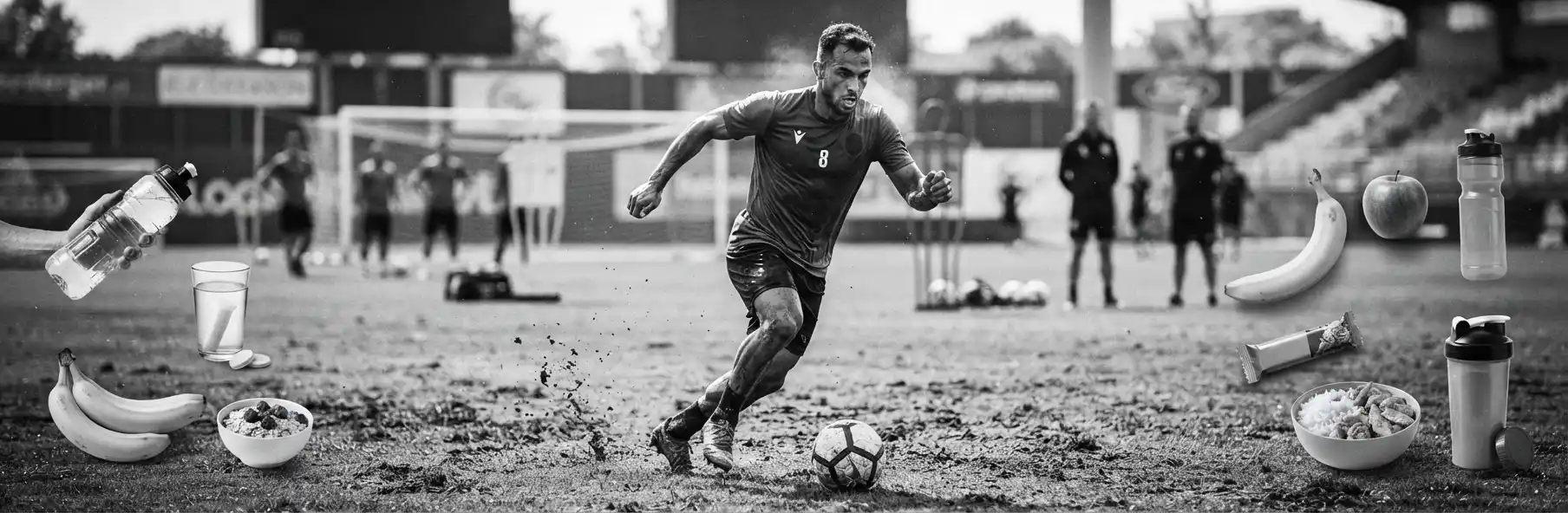
Nutrition and Hydration on Double-Training Days in Football Pre-Season
A nutrition plan for double-training days in football pre-season: what to eat between sessions, hydration and glycogen replenishment to sustain the volume.
Written by
João Araújo
Physical Education Teacher (FADEUP – University of Porto) · Futsal Coach – Level II · UEFA B License · Master’s in Physical Education
15 years teaching Physical Education in schools, 20 years coaching futsal at youth development level and 5 years coaching football. Federated and amateur football and futsal player.
A player who trains morning and afternoon burns, on average, twice the muscle glycogen of a single session. and if the gap between sessions doesn’t replenish that energy, the second session of the day is played out at a deficit. You need a minimum of 3 to 4 hours between sessions with a structured meal in between for the body to arrive at the second session ready to train with quality, not just to “get through it”.
On double-training days in pre-season, most amateur clubs focus on planning the drills and forget that the window between sessions is just as decisive for the quality of the second session as the morning’s tactical plan itself.
Why Double-Training Days Are a Different Challenge
Unlike a single session, here there’s no time for a full nutritional recovery, digesting the in-between meal has to coexist with physical rest and, often, video sessions or regenerative work. Eating too much causes gastric discomfort in the afternoon session; eating too little leaves the player training with low blood sugar, slower and more prone to injury.
The Plan: Structuring a Double-Training Day
| Timing | Action | Goal |
|---|---|---|
| Post-morning session (0-30 min) | Shake or liquid meal with carbs + protein | Kick-start glycogen replenishment without overloading the stomach |
| 90-120 min after morning session | Full solid meal (complex carbs + protein + vegetables) | Energy replenishment and muscle repair |
| 60 min before afternoon session | Light, fast-absorbing carb snack | Energy availability without digestive weight |
| During afternoon session | Electrolyte hydration every 15-20 min | Offset losses accumulated across the day |
Phase 1: Immediate Replenishment
In the first 30 minutes after the morning session, the glycogen replenishment window is at its most responsive. A shake with fruit, milk or a plant-based drink and a protein source is easier to tolerate at this point than a full solid meal.
Phase 2: The Bridge Meal
The main meal between sessions should be built around complex carbohydrates (rice, pasta, sweet potato), with lean protein and vegetables. The most common mistake is a meal too heavy in fat, which slows digestion and still weighs the player down in the afternoon session.
Phase 3: Preparing the Second Session
An hour before the afternoon session, a light snack. a banana, a slice of bread with honey. ensures available glucose without the discomfort of ongoing digestion. Hydration should start here, not just at the start of training.
The Most Common Mistakes on Double-Training Days
- A bridge meal that’s too heavy or too late, leaving little digestion time before the afternoon session
- Hydrating only during training. losses accumulated across the day start before kick-off
- Ignoring individual signs of digestive fatigue. each player tolerates different volumes and timings
- Not adjusting nutrition for hot weather. pre-season often runs through July and August, with sweat losses far above a winter session
🔧 Useful Tool
Each player responds differently to the same eating plan. The SportsLabTools Athlete Journal lets you log fatigue, hydration and digestion symptoms individually, adjusting the nutrition plan case by case throughout pre-season.
Final Nuance: Adapting to the Player’s Profile
Younger academy players are still learning to manage their own eating. simple written guidance, not just verbal instructions, goes a long way. Players with a history of gastric discomfort benefit from liquid meals rather than solid ones in the bridge window.
See also: The Football Pre-Season Microcycle: Structuring the Week with 2 Training Sessions. how to fit this nutrition strategy into the weekly double-training plan.
Checklist: Nutrition on Double-Training Days
- Shake or liquid meal in the first 30 min after the morning session
- Full solid meal 90-120 minutes later
- Light, carb-rich snack 60 minutes before the afternoon session
- Electrolyte hydration throughout the morning
- Plan adjusted for hot-weather days
- Simple written guidance for younger players
- Individual log of digestive and fatigue symptoms
Conclusion
The afternoon session doesn’t start when the ball rolls. it starts with the meal eaten after the morning session. Plan the nutrition of double-training days with the same rigour as the drills themselves, and the second session stops being about survival and starts being quality training.
Don’t leave nutrition to chance on double-training days. Use the SportsLabTools Athlete Journal to monitor how each player responds and adjust the plan accordingly.