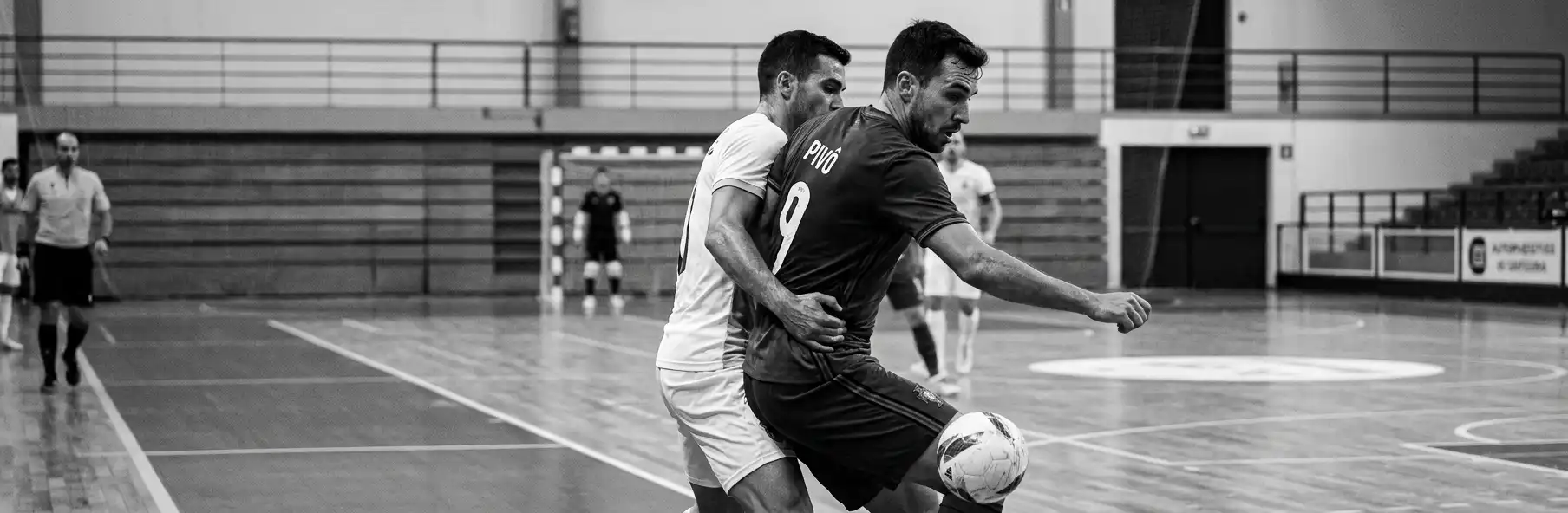
Playing Pivot in Futsal: How I Handle the Constant Marking Mentally
I got this question from a young futsal pivot: 'I always feel hunted down, how do I cope with constant marking without losing my patience?' Here's what I told him.
Written by
João Araújo
Physical Education Teacher (FADEUP – University of Porto) · Futsal Coach – Level II · UEFA B License · Master’s in Physical Education
15 years teaching Physical Education in schools, 20 years coaching futsal at youth development level and 5 years coaching football. Federated and amateur football and futsal player.
I got this question from a 15-year-old, a starting pivot at a youth club near Manchester, a month ago: “I always feel hunted on the court. The defender’s always attached to me, pushing, leaning in, and I spend the whole match fighting for space instead of actually playing futsal. How do I put up with that without losing it?” It’s one of the most honest questions I’ve had from a pivot, and the answer starts with something simple: what he’s describing isn’t bad luck: it’s the definition of the position.
Why Do I Always Feel a Defender Right on Me?
Because you’re supposed to. The pivot is the position in futsal that attracts the most physical contact, because you play with your back to the opponent’s goal, usually right next to the opposing central defender, and the only way that defender can stop a clean reception is by leaning into you physically. It’s not personal: it’s the tactical job of the opposing defender. Recognising that changes how the marking feels: it stops being unfair and becomes the tactical problem you have to solve on every play.
(I’m not entirely sure this applies the same way to pivots who also play other positions across the week: rotation helps rest the body, but the mental discomfort of the marking seems specific to whoever plays that role all the time.)
How I Use the Contact Instead of Fighting It
The most useful change I made was to stop trying to “win” the physical contact with force and start using it instead. Instead of pushing back, I learned to use the defender’s body as a reference point, feeling where they are to know which side they can’t follow me as quickly. A pivot who constantly fights the contact burns energy resisting; a pivot who feels the contact and decides their next move from it burns the same energy creating an advantage.
That’s roughly when I started asking my coach to film matches focused specifically on me, not just the goal chances. Reviewing how the defender positioned themselves before every ball I lost or won taught me more about marking than any verbal advice ever did, because I could see, instead of guess, exactly where I was losing the duel. I use the SportsLabTools Video Analysis tool for this, whenever I can, after more physical matches.
And When the Marking Is Actually Excessive or Unfair?
There’s an important distinction here that took me a while to grasp: physical contact within the rules is the price of the position; constant off-the-ball shoving, shirt-pulling or elbows aren’t just “part of the game”: they’re infringements the referee should be catching, and you have every right to flag them to your captain or the referee without that being seen as weakness.
See also: The Modern Futsal Pivot: How to Create Superiority from the Advanced Post, the tactical explanation of how the team can help you feel less of that pressure alone.
If you play pivot and feel what this young player felt: the marking isn’t going to disappear, because it’s proof the opposition takes you seriously. What changes is your relationship with it: from personal opponent to working material.
Review exactly how the defender marks you, match after match. Use the SportsLabTools Video Analysis tool to turn the pressure into information.
*This account is based on a real case, but the person's identity has been kept private and some contextual details have been recreated for illustrative purposes.*
Optional accelerator · the tool is always free
Start tagging matches without spending hours building categories
An analysis model with 12 categories and more than 60 actions organised by game moment, already carrying individual/collective context and pitch and goal location. Import it and tag your first clip right away.