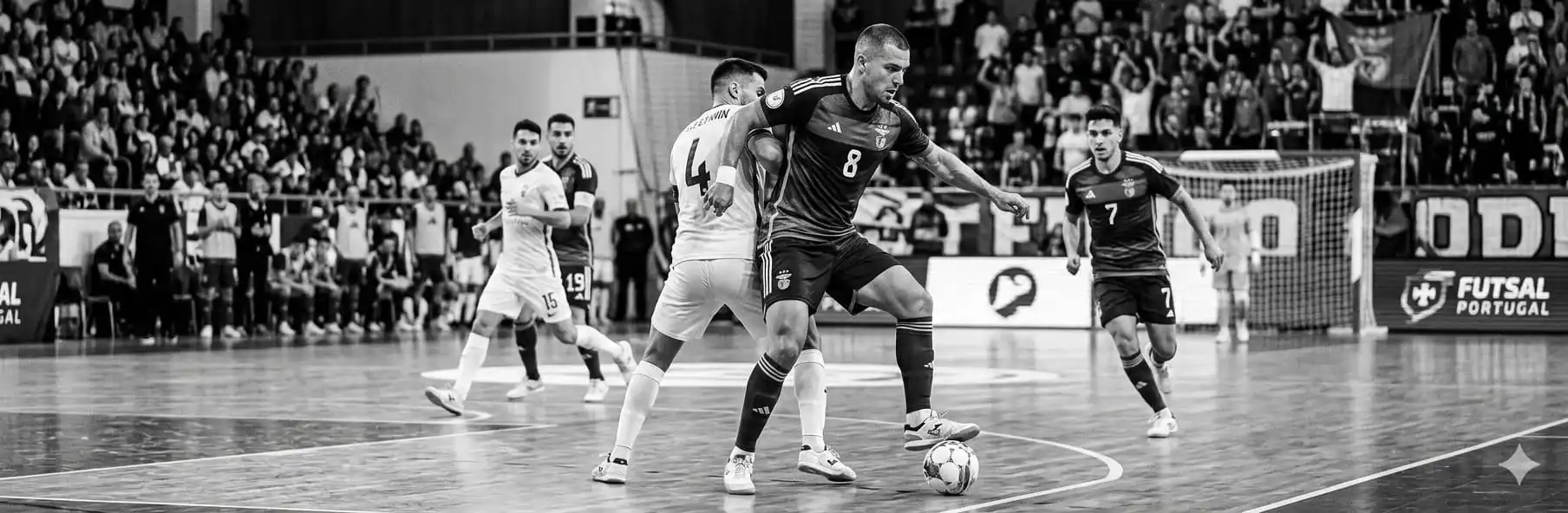
The Modern Futsal Pivot: How to Create Superiority from the Advanced Post
An underused pivot isn't a quality problem. it's a system problem. Discover how to use the pivot to create numerical superiority and unsettle organised defences.
Written by
João Araújo
Physical Education Teacher (FADEUP – University of Porto) · Futsal Coach – Level II · UEFA B License · Master’s in Physical Education
15 years teaching Physical Education in schools, 20 years coaching futsal at youth development level and 5 years coaching football. Federated and amateur football and futsal player.
You have a pivot, but your team can’t use him. It happens within 10 minutes: the pivot stops asking for the ball, the system goes flat, and everyone falls back on the same lateral combinations. The problem isn’t the pivot. it’s the way the team works around him.
Why the Pivot Is Underused
The pivot is the position that demands the most from the team around him. He doesn’t create alone. he’s a catalyst. When the team doesn’t understand the right timing and positioning to play with the pivot, he becomes invisible. The most common causes:
- Slow passes. the pivot receives with his back to goal and defenders already tight
- Lack of winger width. without space, the pivot has nowhere to turn
- Wrong timing on combinations: offering the ball when the diagonal has already closed
The pivot is not a fixed target. He’s the element that creates imbalance when used correctly.
The Consequences of Ignoring the Pivot
When the pivot is neutralised or ignored:
- The opposition defence maintains shape and is never forced to adjust
- Wingers are forced to create alone without interior support
- The team loses offensive depth and becomes predictable
- The pivot loses motivation and starts making fewer runs
Well-organised defences love facing teams without an active pivot: they know exactly where the threat will come from.
The Solution: Principles for Playing with the Pivot
- Be in position before the ball arrives. the pivot must be set before the pass, not reacting after
- Width first. wingers create the space the pivot needs to turn; no width, no interior game
- Read the defender on the pivot. if behind, use body protection and spin; if in front, use the diagonal
- Quick combinations. one-two or immediate layoff, never holding the ball in the pivot
- Second pass always planned. the pivot is a relay point, not the final destination
Application: The Three Essential Combinations
The Overlap Run (Paralela)
The winger passes to the fixo and makes the overlap run through the central channel. The fixo plays into the pivot, who lays it off for the overlapping winger. The winger must start the run before the fixo-pivot pass. not after.
The Diagonal
The pivot positions himself in the channel opposite to the winger with the ball. The winger makes the diagonal cut, they cross paths. the winger receives at the far post, the pivot exits to the vacated channel. Unsettles any defence that doesn’t communicate.
The Quick One-Two
Winger → Pivot → Winger (1-2). Works when the pivot’s defender is tight with no cover. The pivot receives and immediately plays back for the winger arriving from behind. Maximum duration: two touches.
🔧 Useful Tool
Explaining pivot movements without visual support is difficult. players lose track of timing. The SportsLabTools Tactical Board lets you draw winger-pivot combinations with exact trajectories and timing cues to show in the changing room before training.
Special Cases
Pivot against a zonal defence: In a zone, the pivot must float between lines and attract two defenders to create a momentary 4v3. Standing still, he gets stuck in the zone and creates no imbalance.
Pivot at a physical disadvantage: If the pivot is smaller than his marker, prioritise combination speed over ball protection. The longer he holds the ball, the more the defence reorganises.
Pivot in 5v4 with goalkeeper outfield: The pivot moves into the channel of the opposition goalkeeper and threatens the far post. This isn’t just a shooting threat. it’s a disorientation factor for the entire defensive line.
See also: How to Break a Futsal Zonal Defence: 3 Practical Plays. pivot combinations are at the core of all three plays explained in that article.
Checklist: Playing with the Pivot
| Practice | In place? |
|---|---|
| Pivot is in position before the pass arrives | ☐ |
| Wingers maintain width when playing into the pivot | ☐ |
| Passes reach the pivot before the defender closes | ☐ |
| The team uses the overlap run (paralela) regularly | ☐ |
| The second pass after the pivot is always planned | ☐ |
| Pivot floats between lines against zonal defences | ☐ |
| Possession time in the pivot is short and decisive | ☐ |
Conclusion
An underused pivot isn’t an individual quality problem. it’s a system problem. When the team understands when and how to play with the pivot, the opposition loses certainty about where the danger will come from. Work the timing, maintain width and use the pivot as a catalyst. not a destination.
Explain pivot combinations before training them. Use the SportsLabTools Tactical Board to draw trajectories and timing clearly in the changing room.
Optional accelerator · the tool is always free
A library of exercises instead of drawing every one
Packs of 40 exercises per theme, with an animated tactical diagram, four levels of progression, teaching points and success criteria. Import them and they stay in your library, ready to edit and present to the team.