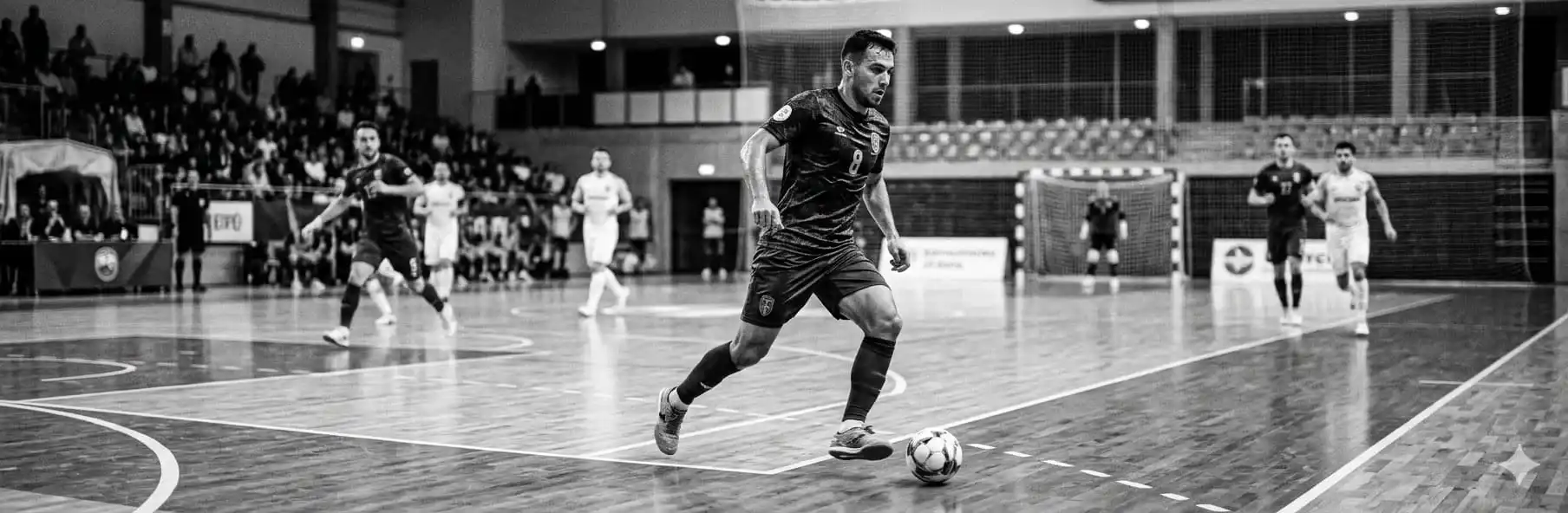
The Modern Futsal Winger: Roles, Positioning and the Evolution of the Position
The modern futsal winger goes far beyond dribbling. Discover offensive and defensive roles, positioning across systems and the most common mistakes to avoid.
Written by
João Araújo
Physical Education Teacher (FADEUP – University of Porto) · Futsal Coach – Level II · UEFA B License · Master’s in Physical Education
15 years teaching Physical Education in schools, 20 years coaching futsal at youth development level and 5 years coaching football. Federated and amateur football and futsal player.
The winger is the most misunderstood position in futsal. Judging a winger by dribbles and goals alone ignores half their tactical value. Modern futsal demands an intelligent, mobile winger active in both phases. not just fast and skilful.
The Problem with a Narrow View
For years, the winger was treated as futsal’s “wide forward”: receive, dribble, shoot or cross. Simple. but this view produces incomplete players who stabilise opponents rather than unsettle them. A static winger waiting for the ball costs the team width, depth and predictability.
The modern winger has structural functions. not decorative ones.
Offensive Roles
Width and Link to the Pivot
The winger’s position along the touchline creates space for the pivot to progress. When the winger constantly cuts inside, it compresses the defensive block. useful in specific moments, dangerous as a habit.
The winger-pivot combination is the most frequent in futsal. The winger must create that passing lane actively, not wait for it to appear.
Combinations with the Pivot
The overlap run (paralela), diagonal and one-two between winger and pivot are the offensive engine of modern futsal. The winger must read:
- When to run through the central channel (overlap)
- When to hold position to receive the pivot’s lay-off
- When to make the diagonal run to the far post
Far Post Arrivals
The far post is the most productive space in futsal attack. Wingers who arrive there consistently score more. not because they finish better, but because they appear where the goalkeeper is most exposed.
Defensive Roles
The winger doesn’t switch off when the team loses the ball. In a press, they lead the pressure line. In a low block, they close the wide channel and prevent the opposing winger from receiving cleanly. In a 2-2 system, they’re responsible for pressing the ball-carrier together with a teammate when required.
Practical rule: A winger who doesn’t press creates an instant 4v3 in the opposition’s favour.
Positioning by System
| System | Base Position | Priority Role |
|---|---|---|
| 4-0 | Wide channel, goal-line depth | Width + far post arrival |
| 3-1 | Wide channel, half-moon line | Pivot support + diagonal run |
| 2-2 | Midfield line | Balance + defensive transition |
Practical drill: 3v2 in the wide channel (winger + fixo + pivot against two defenders), with the rule that the winger can only finish after touching the pivot and reaching the far post — trains both skills (combination play and far-post arrival) in the same exercise.
🔧 Useful Tool
Working through winger movement patterns before hitting the court saves valuable training time. The SportsLabTools Tactical Board lets you draw offensive and defensive variants and explain them clearly in the changing room.
Most Common Mistakes
- Static on the touchline, waiting for the ball without creating a passing lane
- Always cutting inside from the same side, easily neutralised by organised defences
- Ignoring the far post: leaving the most productive space unused
- Not pressing after losing the ball, creating immediate defensive imbalance
- Always receiving with back to the court interior. no options to play inward
See also: Futsal Tactical Systems: The Complete Guide to 3-1, 2-2 and 4-0. understand how the winger’s role shifts across different systems.
Checklist: The Winger in Match
- Maintains width when the team has possession?
- Arrives at the far post consistently?
- Actively creates passing lanes for the pivot?
- Joins the press after losing the ball?
- Alternates between wide and central channels?
- Executes winger-pivot combinations (overlap/diagonal)?
- Doubles up on the ball-carrier in 2-2 when needed?
Conclusion
The winger who only dribbles is an incomplete winger. Work on positioning, far post arrivals and pressing involvement. and you’ll find the system gains fluency without adding tactical complexity. An intelligent winger releases the pivot, pressures opponents and creates more goals than the raw numbers show.
Use the SportsLabTools Tactical Board to prepare winger patterns and explain them before working them on the court.
Optional accelerator · the tool is always free
A library of exercises instead of drawing every one
Packs of 40 exercises per theme, with an animated tactical diagram, four levels of progression, teaching points and success criteria. Import them and they stay in your library, ready to edit and present to the team.