Nutrition for Futsal Tournaments: Managing Food Across Multiple Matches in a Day
A step-by-step nutrition plan for futsal tournaments with multiple matches in a day: what to eat between games, hydration, and mistakes to avoid.
Written by
João Araújo
Physical Education Teacher (FADEUP – University of Porto) · Futsal Coach – Level II · UEFA B License · Master’s in Physical Education
15 years teaching Physical Education in schools, 20 years coaching futsal at youth development level and 5 years coaching football. Federated and amateur football and futsal player.
Three matches in the same day, 60-to-90-minute gaps between each, and most grassroots players arrive at the tournament’s third match already without enough glycogen reserves to sustain the intensity of the first. It’s not a fitness problem. it’s the absence of any nutritional management across the competition day.
Futsal tournaments (weekends with group stages and knockout rounds all in one day) place a very different metabolic demand on the body compared to a single weekly match, and they require a specific nutrition plan that most grassroots teams never get around to designing.
Why a Tournament Day Is a Different Kind of Challenge
In a normal match week, a player has 24 to 48 hours to replenish glycogen and recover before the next effort. In a tournament, that window shrinks to under two hours between matches. not enough for full replenishment, but enough to make the difference between arriving at the final match with energy or completely drained, if the nutrition strategy is well executed during the breaks.
The Plan: Nutrition Across Tournament Day
| Time | Priority | Main action |
|---|---|---|
| 2-3h before match 1 | Initial reserve | Full meal with complex carbohydrates |
| Between matches (60-90 min) | Fast replenishment | Simple carbs + electrolyte hydration |
| 15 min before each following match | Activation | Small portion of fast-absorbing carbs |
| End of tournament | Recovery | Full meal with protein and carbohydrates |
Phase 1: The Meal Before the First Match
Two to three hours before the tournament starts, a full meal with complex carbohydrates (rice, pasta, wholegrain bread) and moderate protein establishes the initial energy reserve. Avoid high-fat or high-fibre foods in this meal. slow digestion competes with delivering energy to the muscle during the effort.
Phase 2: The Breaks Between Matches
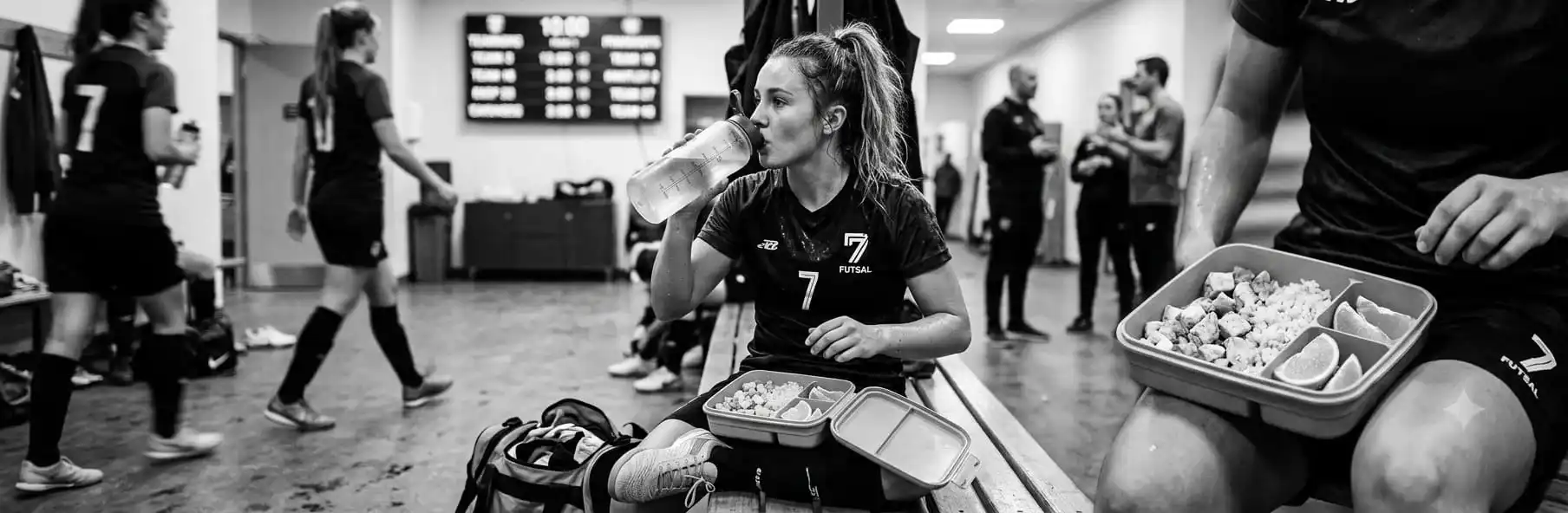
In the 60-to-90-minute gaps between matches, the goal isn’t a full meal (digestion time doesn’t allow it), but fast replenishment: a banana, an energy bar, rice cakes with honey, and hydration with water or an isotonic drink with electrolytes. Avoid heavy or high-protein meals in this window. they slow digestion and reduce the energy available for the next match.
Phase 3: Immediate Activation Before Each Following Match
Fifteen minutes before kickoff of each subsequent match, a small portion of fast-absorbing carbohydrate (an energy gel, fruit) keeps blood glucose levels stable without overloading a digestive system that’s already in motion.
The Most Common Tournament Nutrition Mistakes
- Eating too little between matches out of fear of digestive discomfort. the right strategy avoids that discomfort without sacrificing available energy
- Hydrating with water only. on days of repeated effort, electrolyte loss through sweat is significant, and water alone doesn’t replace sodium and potassium
- Heavy meals between matches. they cause digestive discomfort and reduce energy available during digestion
- Ignoring the strategy until the tournament starts, testing the nutrition strategy in training or normal matches beforehand avoids digestive surprises in competition
🔧 Useful Tool
Planning and communicating tournament-day nutrition strategy to the whole squad avoids last-minute improvisation. SportsLabTools Athlete Journal lets you log what works (and what doesn’t) for each player on days of repeated effort, building an individual history of validated strategies.
Adjusting the Strategy by Player Profile
Not every player tolerates the same foods under repeated effort. Some prefer energy gels, others tolerate solid fruit better; some feel discomfort from dairy between matches, others have no issue at all. Testing the individual strategy in a training context, never for the first time on tournament day, is the only way to eliminate surprises.
See also: Post-Match Recovery in Futsal: A Practical 48-Hour Protocol. the recovery strategy to apply once the tournament ends.
Checklist: Nutrition on Tournament Days
- Full meal with complex carbohydrates 2-3h before the first match
- Simple carbs and electrolytes prepared for the breaks between matches
- Fast-activation portion defined for the 15 minutes before each match
- Heavy meals avoided between matches
- Nutrition strategy tested beforehand in training, never for the first time at the tournament
- Full recovery meal planned for the end of the day
- Each player’s individual preferences logged and respected
Conclusion
Tournament-day nutrition isn’t luck. it’s a technical sequence planned before the first whistle and adjusted to each player. Teams that arrive at the day’s final match with energy in the tank gain a competitive edge over opponents managing their food on the fly.
Log and adjust each player’s nutrition strategy based on real data. Use SportsLabTools Athlete Journal to prepare every tournament with a validated strategy, not improvisation.