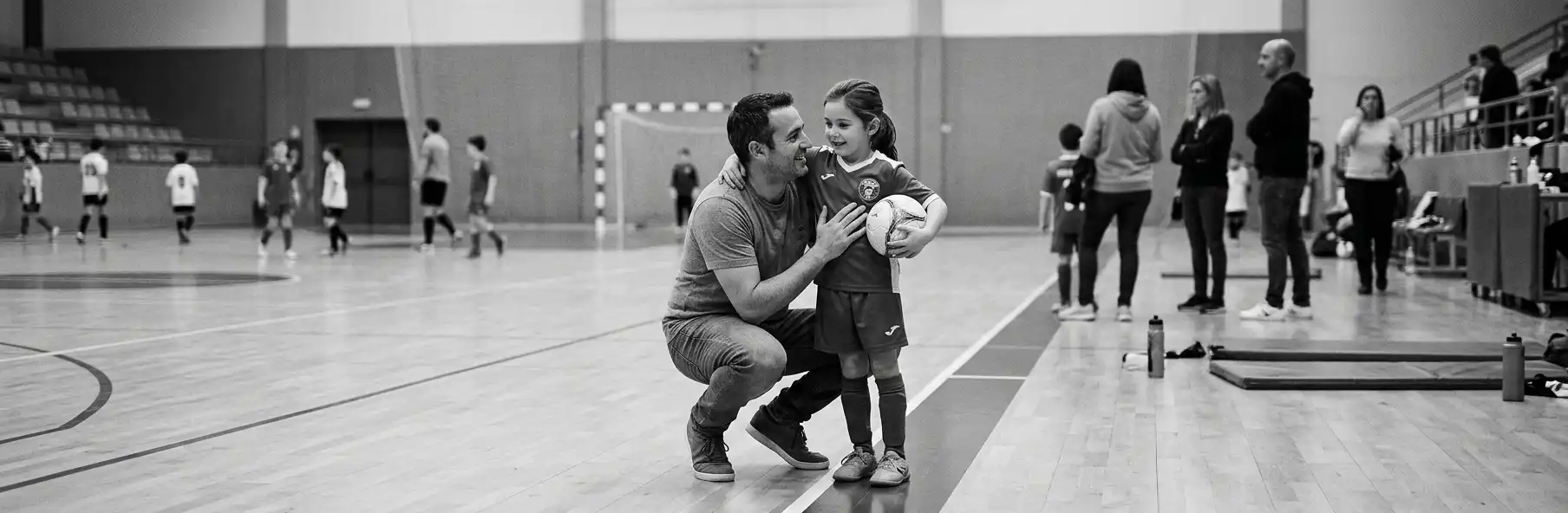
The Parents' Role in Youth Futsal: Supporting Without Adding Pressure
A guide for parents: how to support your child in youth futsal without adding pressure, and how to communicate well with the coach.
Written by
João Araújo
Physical Education Teacher (FADEUP – University of Porto) · Futsal Coach – Level II · UEFA B License · Master’s in Physical Education
15 years teaching Physical Education in schools, 20 years coaching futsal at youth development level and 5 years coaching football. Federated and amateur football and futsal player.
Saturday afternoon, your child spends most of the youth futsal match on the bench. Your stomach tightens before he even leaves the court to tell you how he felt. The temptation is to ask “why didn’t you play more quartets?”. but that question, asked in the heat of the moment, says more about your own anxiety than about his experience of that match.
Being the parent of a young futsal player means managing your own reaction just as much as supporting his. And how you communicate. with your child and with the coach. has more impact on his futsal journey than any tactical advice you could give from the stands.
Why Your Perspective and the Coach’s Rarely Match
You see your child every day, but you rarely see the full context of the team. who has more technical quality, the quartet rotation plan, the season’s development goals. Without that information, the most natural read on less time on court is always personal: unfairness, favouritism, or a lack of recognition for your child’s effort.
What’s Really at Stake When You React in the Heat of the Moment
An emotional reaction straight after leaving the court. even well-intentioned. teaches your child to link futsal to the result and to minutes played, not to enjoyment of the game or their own development. Over time, that link weighs more heavily on the child’s motivation than any decision the coach makes.
Core Principles for Supporting Without Adding Pressure
- Ask “did you enjoy the match?” first, not “how many goals did you score” or “why did you come off the quartet.”
- Save the technical comments for the coach, giving contradictory instructions at home confuses a young player.
- Use the club’s formal channel for questions about selection criteria or minutes, never right after leaving the court.
- Focus on effort and progress, not just the result and minutes played.
Practical Application
The Car Ride Conversation After the Match
The first few minutes after a match aren’t for tactical analysis. An open question about how your child felt is worth more than any comment on performance. even a positive one.
How and When to Talk to the Coach
If you have questions about your child’s development in futsal, book a separate conversation, away from the heat of the match. A question asked calmly, days later, always gets a fuller answer than the same question asked right as players leave the court.
Separating Your Anxiety from the Child’s Experience
Before commenting on the match, ask yourself whether you’re talking about your child’s experience or your own frustration with the result. They’re different things, and only one of them helps a young player keep enjoying futsal.
🔧 Useful Tool
Having concrete data on your child’s progress. rather than just the feeling from the last match. makes conversations at home and with the coach calmer. The SportsLabTools Athlete Journal lets your child log how they felt after each session and match, giving you and the coach a real basis for talking about progress.
Special Cases: When You Feel There’s Genuine Unfairness
If your concern goes beyond normal frustration about minutes. for example, your child’s safety or clearly inappropriate behaviour. treat that separately, with concrete facts and through the club’s formal channel, rather than waiting for the emotion of the moment to raise it.
Also see: Talking to Parents in Youth Futsal: Aligning Expectations. the same principles for managing expectations, seen from the coach’s side.
Checklist: The Parents’ Role in Youth Futsal
- I ask how my child felt first, not just the result
- I save technical comments for the coach
- I use the club’s formal channel for questions about criteria
- I avoid giving contradictory tactical instructions at home
- I separate my anxiety from my child’s real experience
- I book conversations with the coach away from the heat of the match
- I focus on effort and progress, not just minutes played
Conclusion
A parent’s role in youth futsal isn’t to replace the coach. it’s to give their child a safe space to enjoy the game, whatever Saturday’s result was. Aligning your own expectations before you speak is the first step to making that relationship with futsal last well beyond youth level.
Track your child’s progress with more than just the feeling from the last match. Use the SportsLabTools Athlete Journal to talk about real progress, session by session.