Screens and One-Twos in Futsal: Training Winger-Pivot Combinations
A practical guide to training screens and one-twos in futsal: coaching principles, winger-pivot drills, and the mistakes that kill the play.
Written by
João Araújo
Physical Education Teacher (FADEUP – University of Porto) · Futsal Coach – Level II · UEFA B License · Master’s in Physical Education
15 years teaching Physical Education in schools, 20 years coaching futsal at youth development level and 5 years coaching football. Federated and amateur football and futsal player.
The difference between an isolated pivot and a decisive one rarely comes down to physical strength, it comes down to the quality of combinations they can create with the winger. Screens and one-twos are two of modern futsal’s most effective tools, and yet they’re still rarely trained deliberately at most amateur clubs.
The result is predictable: in matches, these plays show up through individual instinct rather than collective automation, and they fail exactly at the moments when they’d matter most.
The Real Problem Behind Combinations That Don’t Work
When a screen or one-two fails in a match, the most common explanation is “the opponent read the play.” In practice, that’s a symptom, not the cause. The real causes are:
- Lack of timing synchronisation between the player screening and the one receiving the ball
- The pivot’s support angle poorly positioned relative to the passing lane
- No variation, always running the same combination makes it predictable
- Too little repetition against real opposition, only in analytical drills
Without deliberate training, these plays rely on individual talent instead of a collective mechanism, and individual talent doesn’t always show up at the decisive moment.
Core Principles of the Screen and the One-Two
Before any drill, winger and pivot need three clear agreements:
- Timing of the screen: it only works if the pivot sets up at the exact moment the defender starts their marking movement
- Support angle on the one-two: the pivot should receive with their back or side to goal, never facing their teammate, to return the ball in one touch
- Reading the defender, not the ball: the winger decides to combine based on the defender’s reaction, not on blind repetition
Without these three agreements verbalised and drilled, any combination is left to chance.
Practical Application: Drills to Train the Combinations
Drill 1. One-Two Without Opposition Winger and pivot in fixed positions, with a passive defender between them. Goal: automate the first-touch return pass without thinking about the decision.
Drill 2. Screen With an Active Defender The pivot positions to block the defender’s path while the winger drives with the ball. This trains the exact timing of the screen against real opposition, not simulated.
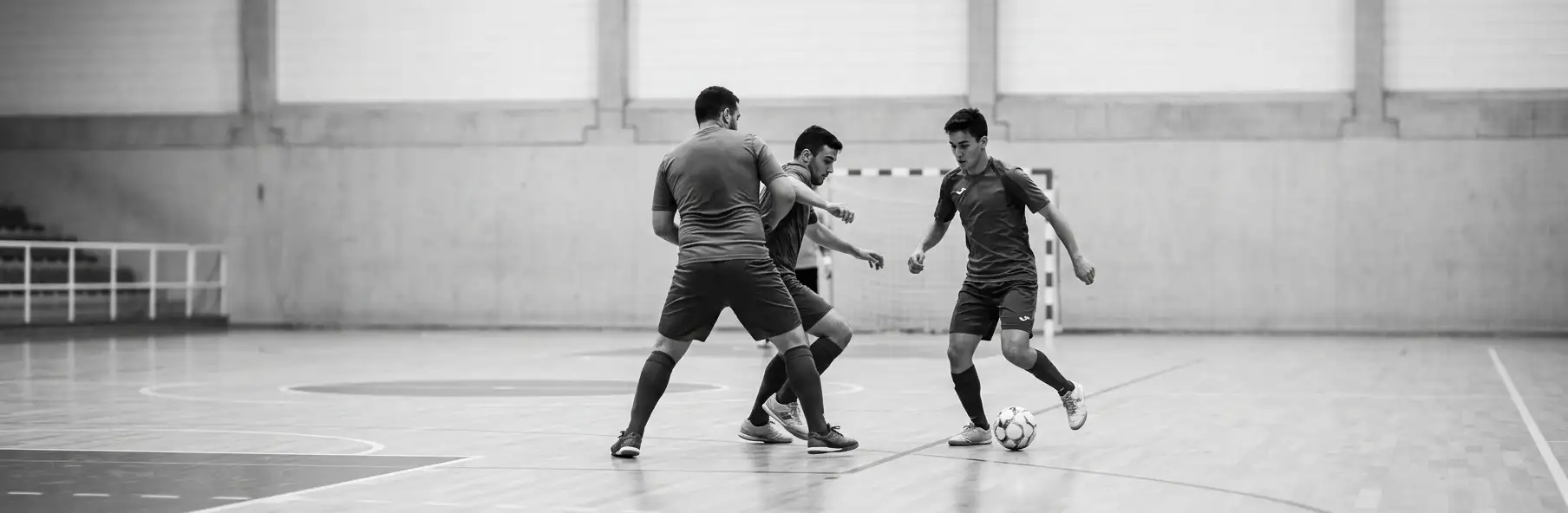
Drill 3, 2v2 Game Situation in Midfield The toughest phase: winger and pivot against two defenders in a tight space (for example, 10x8 metres), deciding between a screen, a one-two, or an individual dribble based on how the opponent reacts.
🔧 Useful Tool
Teaching the exact timing of a screen means showing the play, not just describing it. The SportsLabTools Tactical Board lets you draw and simulate the winger and pivot’s movement before taking the drill onto the court.
Common Mistakes When Applying the Combinations
- The pivot screening too late: kills the element of surprise and lets the defender recover position
- The winger forcing the one-two even without space: loses the ball instead of creating an advantage
- Only training without opposition: the combination fails most often against real pressure, rarely simulated in analytical drills
- Always repeating the same variation: teams that scout you will spot the pattern within a few minutes of play
Also check out: Modern Futsal Pivot: Creating Superiority From the Advanced Position, the pivot’s positioning is the foundation on which effective screens and one-twos are built.
Checklist: Training Screens and One-Twos
- Screen timing trained against an active defender, not just a passive one
- Pivot’s support angle corrected before working on execution speed
- One-two drill without opposition automated weekly
- 2v2 reduced-space situation included in the microcycle
- Variation between screen, one-two, and individual dribble trained
- Video of successful and failed plays reviewed with the group
- Verbal communication between winger and pivot reinforced every session
- Combinations tested against different opposing defensive systems
Conclusion
Screens and one-twos aren’t lucky breaks, they’re trainable mechanisms built on clear timing and angles. Winger-pivot pairs that master these combinations don’t have more talent; they have more deliberate repetition.
Take your team’s attacking combinations to the next level. Use the SportsLabTools Tactical Board to design, simulate, and correct your winger and pivot’s movements before every match.
Optional accelerator · the tool is always free
A library of exercises instead of drawing every one
Packs of 40 exercises per theme, with an animated tactical diagram, four levels of progression, teaching points and success criteria. Import them and they stay in your library, ready to edit and present to the team.